










Image:
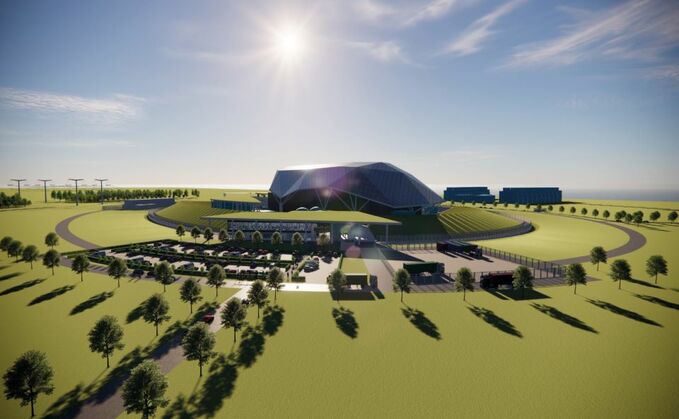
Rolls-Royce’s vision for the look of its SMRs | Credit: Rolls-Royce
A deal has been struck to explore the production of zero emission hydrogen at Rolls Royce’s proposed small modular reactor (SMR) nuclear power plants.
The Memorandum of Intent between Rolls-Royce SMR, nuclear development firm ULC-Energy, and carbon engineering firm Topsoe commits the companies to investigate how hydrogen could be produced using electricity and heat generated by smaller, next-generation nuclear plants.
Rolls Royce SMR is among a number of firms that have passed the first stage of the government’s small nuclear reactor competition, as part of Ministers’ plans to see the fledgling technology deployed by the 2030s.
Sundus Cordelia Ramli, chief commercial officer of Topsoe’s power-to-x business, said the firm plans to use solid oxide electrolyser cell (SOEC) electrolysis technology to investigate the potential for producing hydrogen using nuclear SMRs.
“With our SOEC technology, we can produce more hydrogen relative to influx of renewable power input when compared to competing electrolysis technologies,” she said. “To enable net zero by 2050, we need to look into all possible technologies, and we’re confident that our electrolysis technology will be one of the key components in the race for net-zero.”
The partners said that by pairing nuclear energy with a SOEC cell they could potentially produce hydrogen at a lower cost than alternative electrolysis-based hydrogen production plants.
They said the electrolysis process – which splits water into hydrogen and oxygen – could take place at high temperatures, a shift which increases production efficiency. Further efficiency gains could be unlocked because nuclear plants produce power almost constantly – unlike other renewable sources, such solar and wind, that can be used to make ‘green hydrogen’.
Moreover, nuclear power plants generate heat as well as electricity, meaning hydrogen production plants could harness waste heat directly, increasing the effective energy capacity of new SMR plants.
The partnership commits the partners to producing a “valuation of the operational flexibility” of small nuclear reactors equipped with SOEC cells.
“We expect nuclear energy, especially in combination with high temperature electrolysis, to be able to produce zero-emission hydrogen competitively on a stand-alone basis,” said Dirk Rabelink, CEO of ULC Energy. “Additional value associated with the operational flexibility will further enhance the business case for this solution. We are particularly pleased that this study has been made possible by the support from a number of national and international companies.”
Small nuclear reactors have been hailed as a means of providing low-carbon, baseload power that can help balance a renewables-dominated energy grid, without the high costs and lengthy construction delays often associated with conventional nuclear plants.
But critics argue SMRs are an untested technology that could undermine investment in proven, successful renewables and energy storage technologies, which are cheaper to build and run. There is scepticism among some observers that SMR projects can avoid the cost overruns and delays typically experienced by larger scale reactor projects.
However, Harry Keeling, Rolls-Royce SMR’s head of industrial markets, said the production of low-carbon hydrogen represented a “critical step” on the pathway to decarbonising wider society and argued SMRs could play a key role in boosting hydrogen production capacity. “This agreement with ULC-Energy and Topsoe is an exciting step toward unleashing the potential of the Rolls-Royce SMR as its ability to flexibly provide thermal and electrical energy supports a wide range of industrial applications, chief amongst these being the large-scale generation of low-cost hydrogen,” he said.
Keep up to date with all the latest green business news by signing up to the free Daily and Weekly BusinessGreen Newsletters.