









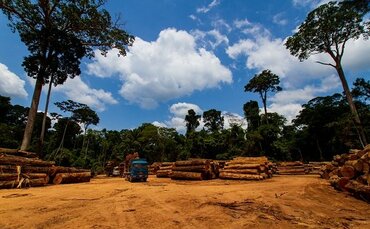
The world will need to find additional land equivalent to all of Brazil’s cropland by 2030 if it is to meet the world’s projected demand for food, feed, fuel, and natural capital, according to a new report from consultancy McKinsey that warns urgent reforms to global food systems are required to avoid a fresh wave of global deforestation.
The wide-ranging report, titled Striking the balance: catalyzing a sustainable land use transition, calculates that 70 to 80 million hectares of additional cropland if needed by 2030 based on current trends.
It details how surging demand for feedstock, food, and fuel is set to result in intensifying competition for land through to the end of the decade and beyond. The bulk of the demand for cropland is expected to come from the meat industry, with demand for feedstock for livestock set to account for around 70 per cent of all incremental cropland needed by 2030. Crop production for human consumption is expected to account for around 20 per cent of additional demand, with biofuel production making up the remaining 10 per cent.
The report warned hotspots of competition for land are already emerging in Latin America and Sub-Saharan Africa, which are likely to be the source of most additional cropland, leading to increased pressure on forested land and higher land and food prices.
“Today 60 per cent of the Earth’s habitable land is in use by humans,” said Amandla Ooko-Ombaka, partner at McKinsey. “But the appetite for land – particularly for food and fuel is putting pressure on arable land. But unlike in previous decades, new cropland cannot come from deforestation. We need to change how we use land to meet our commitments to climate and nature, and feed a growing global population.”
The report argues that some of the projected additional demand for land can be offset through the conversion of degraded land, stronger agricultural yield growth, and efficiencies from increased trade.
But it warns that such trends will likely prove insufficient and as such there will be a need to reduce land demand through measures such as “behavior change, reducing food waste and seeking alternative offshore resources”.
The report argues policymakers, businesses, and investors urgently need to embrace a wide range of measures to boost agricultural yields, reduce waste, enhance climate resilience, and curb demand for land-intensive produce.
Specifically, the report calls for the adoption of “acceleration actions” such as scaling up resilient agricultural practices, increasing demand for more sustainable crops such as brassica carinata, and implementing nature-based solution carbon credits to incentivise reforestation and conversion of pastureland to forest cover.
Nelson Ferreira, senior partner at McKinsey, warned rising demand for land could be further exacerbated by worsening climate impacts. “The world will need both sides of the supply, demand equation to strike a balance,” he said. “Striking the balance is critical for both public and private sector players. Input providers need to know that land prices will increase by the end of the decade. Farmers’ margins will decrease, and input providers need to understand what it means for farmers. Funds investing in land need to know that some of the hotspots for food, fuel, biodiversity are the same. There could be a race for prime spots of land – so they have to decide where to go now.
“Similarly, governments can help create the right incentives and investment in public infrastructure to support a sustainable land use transition, for example irrigation to support restoration of degraded land.“
The report comes in the same week as a fresh analysis from the FAIRR network of investors revealed that emissions from the world’s 20 largest meat and dairy firms rose again last year, prompting fresh calls for policymakers to prioritise measures that can help deliver a more sustainable food system.
Meanwhile, a new investigation from campaign groups Global Witness and Trase this week revealed that imports to the UK of beef, soy and palm oil products linked deforestation are continuing, despite government promises to block the practice.
The groups accused the government of failing to finalise legislation promised at the COP26 Climate Summit in Glasgow in 2021 that would make it illegal to import products linked to tropical deforestation.
“For two years, the government has been dithering about which deforestation-causing commodities to include in these regulations,” said Veronica Oakeshott, head of the forest campaign at Global Witness. “In this time, tropical forests have continued to be destroyed to grow crops and graze cattle. And some of that product ends up for sale in the UK. This delay is tainting the UK public’s products – from the beef on our dinner plates to the palm oil in our shampoo.
A Defra spokesperson said the government remained committed to cracking down on imports linked to deforestation. “The vast majority deforestation for commercial agriculture is conducted in violation of laws in producer countries, which is why our Environment Act includes world-leading due diligence legislation to help tackle this illegal activity and to rid these products from UK retail shelves,” they said. “We will be setting out our next steps imminently. Our approach is based on partnership with producer countries and will reinforce the efforts of governments in producer countries to ensure sustainable forest and land use.”
Keep up to date with all the latest green business news by signing up to the free Daily and Weekly BusinessGreen Newsletters.