










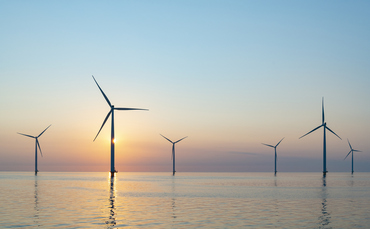
The Crown Estate hopes to squeeze an additional 4GW of green electricity capacity from a number of offshore wind farm projects that are already in the pipeline, in a move that could provide a major boost to efforts to deliver on the government target of 50GW of offshore wind capacity by 2030.
The seven projects that could see their capacity increased include Dogger Bank D, Awel y Môr, North Falls, Five Estuaries and Rampion 2, as well as the Dudgeon and Sheringham Shoal site extensions. The move comes after developers claimed extra capacity could be generated from the areas of the seabed where they already hold existing development rights.
Any increase in capacity could provide a boost to the industry after the most recent round of clean energy contract auctions failed to secure any bids from offshore wind developers, following the government’s controversial decision not to increase the reserve price for the auction in response to inflationary pressure across the industry.
The government had originally hoped that over 5GW of new offshore wind capacity could be secured through the most recent contract for difference (CfD) auction, but ultimately no bids were submitted. The failure of the auction sparked warnings that without urgent action the UK could miss out on the target of having 50GW of offshore wind capacity by 2030.
Announcing the review of the current pipeline yesterday, the Crown Estate said the move acknowledges how since awarding seabed rights to the next wave of projects, offshore wind turbine technology has improved, enabling more clean energy to be generated from the same seabed area.
In considering the potential to add extra capacity, The Crown Estate hopes to balance economic and clean energy potential with its commitment to protect nature and biodiversity and its duty to make the most effective and efficient use of a valuable, but increasingly crowded, seabed.
Any decision taken will be subject to a ‘Plan-Level Habitats Regulations Assessment’ (HRA) to understand the collective environmental impact of additional capacity across all seven projects, the body said, including through consultations with relevant stakeholders, Statutory Nature Conservation Bodies (SNCBs), and regulators.
It is hoped that a decision on additional capacity can be finalised within 12 months subject to regulated planning processes.
Gus Jaspert, managing director for marine at The Crown Estate, said that as demands on the seabed intensify the agency was committed to taking a more strategic, holistic, and data-led approach to ensure each area of the seabed is working as effectively as possible to contribute to the needs of both the economy and nature.
“These proposed capacity increases make use of seabed areas that have been previously granted rights, are not being fully utilised, and may have limited options for alternative uses,” he said.
“We are therefore pleased to launch a process to examine whether this additional capacity can be made available in a way which remains true to our commitment to nature and biodiversity.”
Dan McGrail, chief executive of RenewableUK, said maximising the amount of offshore wind capacity in areas where leasing agreements are already in place would prove vital to delivering on the government’s target of 50GW by 2030.
“Utilising these areas of seabed to the full could add up to 4GW, which is more than a quarter of the UK’s current offshore wind capacity, representing a significant step forward,” he said.
“Accelerating deployment in this way would make projects even more cost-effective through economies of scale, which is good news for consumers as well as creating further opportunities for us to grow our supply chain.
“The industry is working closely with other seabed users and nature conservation bodies to ensure that we continue to develop projects in an environmentally sensitive way which protects and enhances the UK’s rich marine biodiversity. Rapid improvements in offshore wind technology since these leases were awarded mean that the time is now right to reassess carefully how we can make the most of our main source of renewable power in the years ahead”.
The announcement comes after separate analyses by Cornwall Insight and Imperial College London warned that a slower offshore wind rollout in the wake of the failed CfD auction could increase power prices and carbon emissions, leading to the government narrowly missing its target to deliver 50GW of offshore wind capacity by the end of the decade and a net zero emission power system by 2035.
Keep up to date with all the latest green business news by signing up to the free Daily and Weekly BusinessGreen Newsletters.